📑 Table of Contents
- Diabetes Onset Symptoms Self-Diagnosis: Why Is Early Detection Vital?
- Diabetes Onset Symptoms Self-Diagnosis Checklist: Typical Signs and Subtle Anomalies
- 2-1. Multi-Angled Analysis of the Classic “Three Polys” Symptoms
- 2-2. Easily Overlooked Skin and Sensory Warning Signs
- Multi-Angled Analysis of Diabetes Onset Symptoms Self-Diagnosis by Age and Characteristics
- 3-1. The Hidden Danger of “Lean Diabetes” Surging Among Young Adults in Their 20s and 30s
- 3-2. Characteristics of “Prediabetes” Where Blood Sugar Spikes Only After Meals
- 4 Key Immediate Steps to Take After Confirming Your Diabetes Onset Symptoms Self-Diagnosis
- 4-1. Precise Measurement of Fasting and Postprandial Blood Glucose
- 4-2. Blood Sugar Spike-Preventing Diet and the Reverse Eating Order Method
- 4-3. Aerobic and Strength Exercises targeting Thigh Muscle Growth
- 4-4. Managing Sleep Patterns and Stress Hormones
- Official Medical Resources Related to Diabetes Onset Symptoms Self-Diagnosis
1. Diabetes Onset Symptoms Self-Diagnosis: Why Is Early Detection Vital?
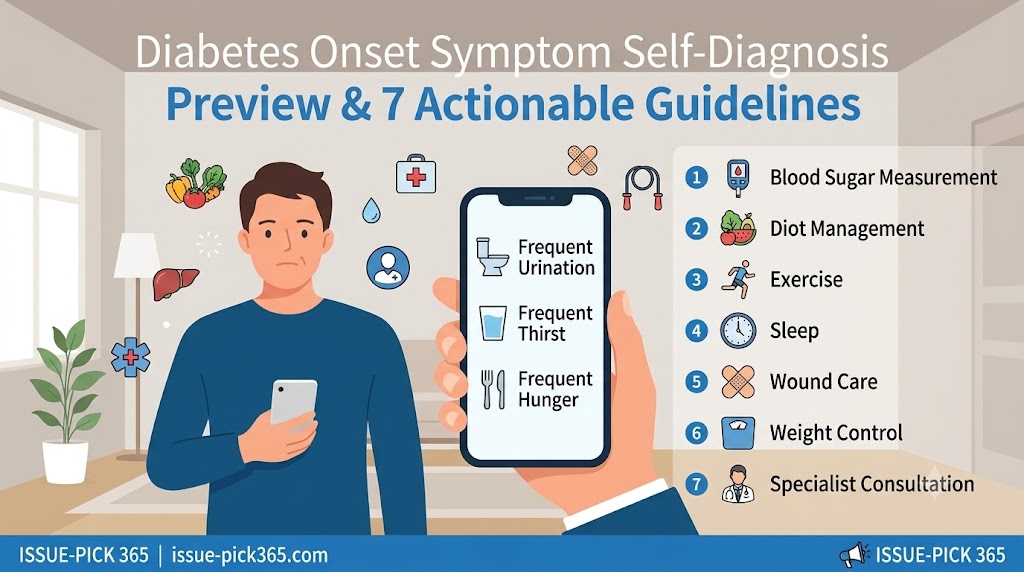
Diabetes onset symptoms self-diagnosis is the single most crucial first step to detecting diabetes early—a condition that silently approaches and damages blood vessels throughout the body—and safeguarding your healthy daily life. In modern society, the number of diabetic patients is increasing exponentially every year due to high-calorie delivery food, increased processed food consumption, chronic stress, and sedentary lifestyle habits.
The primary issue is that early-stage diabetes causes no severe pain or visible external injuries, making it difficult to recognize on your own. Even when pancreatic beta cells are destroyed and problems arise with insulin secretion or function, there is no particular discomfort initially. However, even during this period, microvascular damage continues to progress internally. Therefore, maintaining an attentive attitude toward periodic self-diagnosis without missing the tiny warning signals your body sends is paramount.
2. Diabetes Onset Symptoms Self-Diagnosis Checklist: Typical Signs and Subtle Anomalies
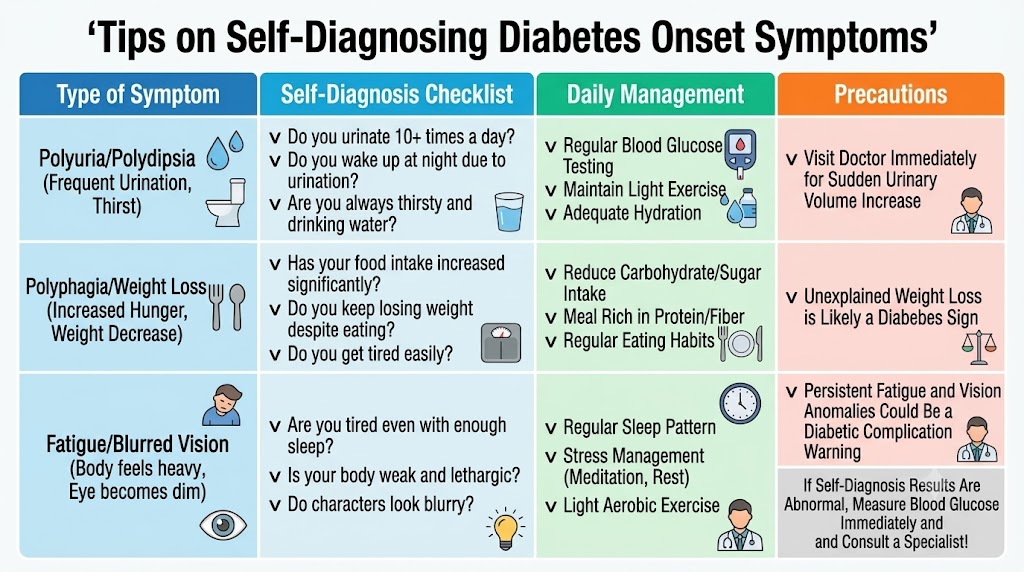
If two or more of the following signals apply to you, checking your blood sugar levels is strongly recommended.
2-1. Multi-Angled Analysis of the Classic “Three Polys” Symptoms
- Polyuria (Excessive Urination): As excess sugar in the blood draws out water through urine, you will experience frequent urination, including nocturia (waking up at night to urinate).
- Polydipsia (Excessive Thirst): Continuous fluid loss dehydrates your cells, leading to intense, unquenchable thirst.
- Polyphagia (Excessive Hunger): Even when you consume food, glucose cannot enter the cells properly, causing the brain to send persistent hunger signals.
2-2. Easily Overlooked Skin and Sensory Warning Signs
- Unexplained Weight Loss: Despite eating more, you may lose several kilograms as your body breaks down protein and fat for energy instead.
- Numbness in Hands/Feet and Skin Itching: Reduced nutrient supply to peripheral nerves causes tingling sensations or persistent itching in your fingertips or toes.
- Delayed Wound Healing: Minor bruises or cuts fail to heal properly for over a month and tend to fester.
3. Multi-Angled Analysis of Diabetes Onset Symptoms Self-Diagnosis by Age and Characteristics
3-1. The Hidden Danger of “Lean Diabetes” Surging Among Young Adults in Their 20s and 30s
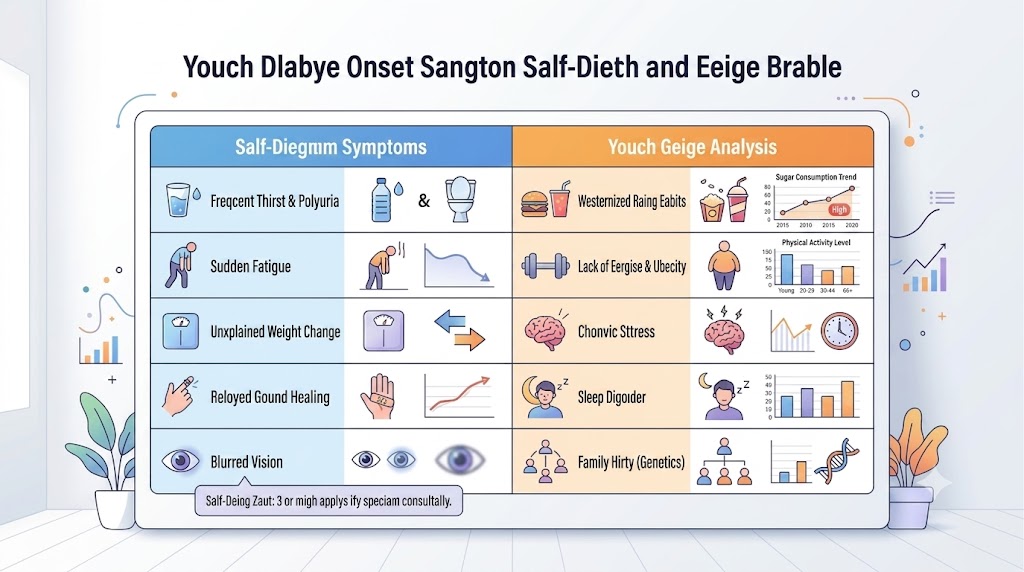
Even if you are slim and non-obese, you are not entirely safe from diabetes. Even if you appear lean on the outside, a smaller pancreas size or high visceral fat can elevate insulin resistance, triggering diabetes. Diabetes in younger adults tends to progress rapidly, so if you suffer from severe post-meal sleepiness or chronic fatigue, checking your levels is essential.
3-2. Characteristics of “Prediabetes” Where Blood Sugar Spikes Only After Meals
A condition where fasting blood sugar is normal (under 100 mg/dL) but 2-hour postprandial blood sugar ranges between 140 and 199 mg/dL is called “impaired glucose tolerance (prediabetes).” Even if there are no distinct symptoms during this stage, the risk of complications has already begun. If you experience severe post-meal lethargy or drowsiness, prediabetes should be suspected.
4. 4 Key Immediate Steps to Take After Confirming Your Diabetes Onset Symptoms Self-Diagnosis
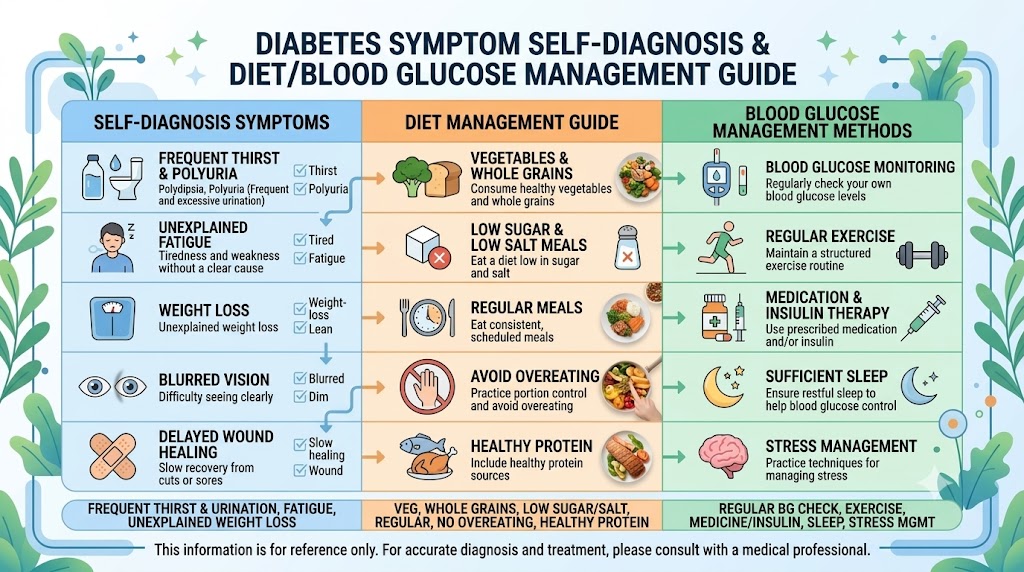
If you suspect abnormal symptoms through your self-diagnosis, you must immediately take action to manage your blood sugar using the following guidelines.
4-1. Precise Measurement of Fasting and Postprandial Blood Glucose
First, use a home glucose meter or visit a nearby clinic to measure your fasting blood sugar, 2-hour postprandial blood sugar, and HbA1c (Hemoglobin A1c) level, which reflects your average blood sugar over the past 2–3 months. (Normal HbA1c level: below 5.7%)
4-2. Blood Sugar Spike-Preventing Diet and the Reverse Eating Order Method
Try implementing the ‘Reverse Eating Order Method’ by changing your meal sequence to ‘Vegetables (Fiber) ➔ Protein (Meat/Fish) ➔ Carbohydrates (Rice/Noodles)’. This effectively prevents sudden ‘blood sugar spikes’ compared to eating carbohydrates first.
4-3. Aerobic and Strength Exercises targeting Thigh Muscle Growth
Approximately 70% of human blood glucose is consumed by lower body muscles (thighs). Walking for 20 minutes starting 30 minutes after meals, combined with lower-body strength exercises like squats, significantly improves insulin sensitivity.
4-4. Managing Sleep Patterns and Stress Hormones
Lack of sleep and stress prompt the release of cortisol, a hormone that stimulates the liver to release glucose into the bloodstream. Securing more than 7 hours of sleep daily and actively managing stress are critical elements of blood sugar control.
5. Official Medical Resources Related to Diabetes Onset Symptoms Self-Diagnosis
For more specific medical information and professional blood sugar management guidelines, please consult the official verified organizations below:
・CDC (Centers for Disease Control and Prevention) – Diabetes
https://www.cdc.gov/diabetes/index.html
・ADA (American Diabetes Association) – Official Website
https://diabetes.org
[Please use this information for reference only. If you require medical advice or diagnosis, please consult a healthcare professional.]
#DiabetesOnsetSymptomsSelfDiagnosis #EarlyDiabetesSymptoms #BloodSugarSpike #LeanDiabetes #Prediabetes #ReverseEatingOrder #IssuePick365