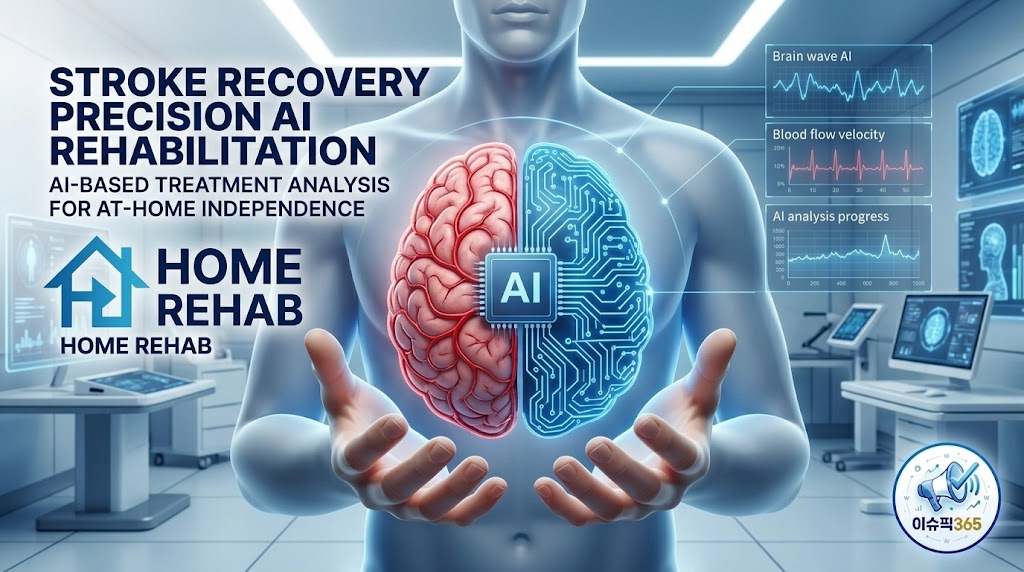
A New Paradigm in Stroke Rehabilitation: Why Home Treatment?
The most critical factors in stroke treatment are emergency response within the golden time and continuous rehabilitation following discharge. However, in reality, many patients face significant inconvenience and financial burden when traveling to hospitals daily post-discharge.
To overcome these limitations, home rehabilitation solutions integrated with artificial intelligence technology are rapidly emerging. Moving away from past methods of simple repetitive movements, we have entered an era where advanced sensors and algorithms analyze individual patient motor skills in real time to deliver optimized, tailored programs.
Table of Contents
- Active AI-Driven Home Rehabilitation Technologies in 2026
- Personalized Monitoring and Feedback Systems Changing Patients’ Lives
- The Vision of Future Rehabilitation Presented by Artificial Intelligence
- Practical Guide for Successful Home Rehabilitation
1. Active AI-Driven Home Rehabilitation Technologies in 2026
The artificial intelligence rehabilitation solutions actively utilized in clinical settings and homes as of 2026 are based on advanced computer vision and wearable device technologies.
- Motion Recognition Monitoring: Specialized or smartphone cameras observe patient movements and precisely analyze joint angles and imbalances.
- Customized Difficulty Adjustment: Artificial intelligence algorithms autonomously adjust the intensity and frequency of daily rehab exercises based on patient performance.
- Wearable Robotics: Electromyography (EMG) sensors detect the wearer’s intent to move, assisting with gait or upper extremity exercises.
Image Alt Text: A stroke patient wearing AI-driven home rehabilitation equipment while joint movements are precisely measured.
2. Personalized Monitoring and Feedback Systems Changing Patients’ Lives
The greatest advantage of artificial intelligence home rehabilitation is that patients receive immediate feedback on whether they are exercising in the correct posture.
Traditional self-taught home training carried the risk of additional musculoskeletal injury due to improper form. However, current artificial intelligence systems correct incorrect movements upon detection and transmit collected data to attending physicians, ensuring seamless continuity of care.
[Patient Performance Data] ➔ [AI Motion/Pattern Analysis] ➔ [Real-Time Feedback & Intensity Adjustment] ➔ [Remote Physician Monitoring]
3. The Vision of Future Rehabilitation Presented by Artificial Intelligence
Future artificial intelligence-driven treatments will expand beyond simple physical movement assistance into new frontiers.
Integration with Brain-Computer Interfaces (BCI)
Combined with technology that directly reads neural signals, precision rehabilitation—where exoskeletons or stimulators activate solely through the intention to move paralyzed limbs—will become increasingly commonplace.
Integration with Digital Therapeutics (DTx)
Gamified VR/AR rehabilitation software powered by artificial intelligence simultaneously boosts patient cognitive function recovery and exercise motivation.
4. Practical Guide for Successful Home Rehabilitation
When adopting an artificial intelligence rehabilitation system at home, it is advisable to consider the following:
- Consultation with Specialists: Verify the patient’s exact paralysis stage and health status before selecting approved equipment.
- Creating a Safe Environment: Remove surrounding obstacles from the exercise space to prevent fall injuries.
- Continuous Data Tracking: Review daily analytical reports to set incremental goals.
For detailed information on innovative medical technologies, you can consult the original research database at National Center for Biotechnology Information (NCBI){:rel=”dofollow”}.
#Issue-Pick365 #ArtificialIntelligence #StrokeRehab #HomeRehab #DigitalHealthcare #2026MedicalInnovation